Mohs Surgery: What It Is and Why It's the Gold Standard for Skin Cancer
Mohs surgery is a specialized procedure for removing certain skin cancers with careful microscopic control. Instead of taking a large area at once and waiting for a later pathology report, the surgeon removes the visible tumor in thin stages and examines each layer during the visit. This makes it possible to continue only where cancer cells remain while limiting the removal of healthy skin.
The central idea is simple: remove the cancer a layer at a time, check the tissue, and stop when the examined edges are clear. The surgeon usually numbs the area with a local anesthetic, so the patient remains awake but should not feel sharp pain during the procedure.
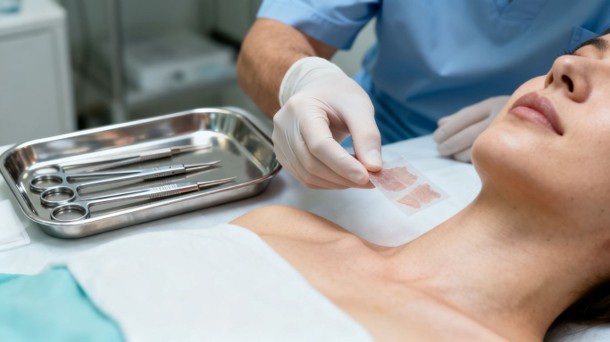
Mohs is especially useful when a tumor has an unclear border or sits where preserving surrounding skin matters. After removing a thin layer, the surgeon divides and maps the tissue so its location can be tracked accurately. The sample is prepared for microscopic examination, including the edges and the deeper surface. If cancer cells are found, the map shows where the next layer needs to be taken; the process repeats until no tumor remains in the examined margins.
Mohs is most commonly used for basal cell carcinoma and squamous cell carcinoma, particularly when they are considered high risk. It may also be considered for selected less common tumors, depending on the cancer's behavior, location, and the surgeon's judgment. The best treatment cannot be chosen from the diagnosis alone; the pathology report and the details of the individual tumor matter too.
Why Mohs Surgery Is Considered the Gold Standard
Removing less uninvolved tissue can make wound closure and reconstruction more manageable, especially on the face, hands, ears, or other areas where skin is limited. It can also help preserve nearby structures and the natural contours of the body. Healthy tissue preservation is not merely cosmetic: it may support function as well as appearance.
Mohs surgery is often called the gold standard for selected nonmelanoma skin cancers because it combines tissue removal with immediate microscopic review. The surgeon is not relying only on what the tumor looks like from the surface; instead, the method offers a detailed way to evaluate the margins while the patient is still present, which can reduce uncertainty about whether cancer remains.
For appropriately selected basal cell and squamous cell carcinomas, Mohs has very high cure rates. Results vary with the tumor's type, size, depth, location, and whether it has been treated before. Calling it a gold standard does not mean it is automatically best for every skin cancer; it means the technique is particularly reliable in situations where complete removal and tissue conservation are both priorities.
Surface appearance can underestimate how far some skin cancers extend. Tissue mapping connects each microscopic finding to a precise spot on the wound, allowing the surgeon to remove more tissue only from an area where tumor is detected. This targeted process is one reason Mohs can be more tissue-sparing than removing a wider margin without examining the entire perimeter in the same way.
The value of conserving skin increases when there is little room for a straightforward closure or when a small change could affect movement or sensation—areas around the eyelids, nose, lips, ears, fingers, and other delicate structures often require careful planning.
Who May Be a Good Candidate for Mohs Surgery
A dermatologist considers Mohs when the expected benefit of precise margin control and tissue preservation outweighs the demands of the procedure. The decision is based on more than a biopsy label—tumor behavior, location, size, prior treatment, and the patient's overall health all help shape the recommendation. A tumor that is large, poorly defined, deeply invasive, or showing aggressive features may have a greater chance of extending beyond what can be seen, and Mohs can be useful in these cases because the surgeon checks the tissue boundaries during treatment.
Recurrent skin cancers can be harder to define because prior surgery, scarring, or other treatment may obscure the edges. A method that examines the margins carefully can help the surgeon locate remaining tumor while avoiding unnecessary removal of scarred or healthy tissue.
Cancers near the eyes, nose, lips, ears, or fingers are also common candidates, since these sites contain structures that are important for appearance and function and there may be little extra skin available. The dermatologist reviews the biopsy, examines the site, considers whether the tumor is primary or recurrent, and assesses its size and borders before recommending our full skin cancer treatment options, since a different approach may be reasonable when the cancer is small, clearly defined, and located in a low-risk area.
What to Expect During the Mohs Surgery Process
Mohs is generally performed as an outpatient procedure under local anesthesia. The visible surgery may be brief, but the full appointment can take much longer because each tissue layer must be processed and checked. Bringing realistic expectations—and something to read or listen to—can make the waiting periods easier.
Follow the surgical team's instructions about eating, medications, and bathing before the visit. Tell the office about blood thinners, supplements, allergies, implanted devices, and conditions that could affect healing. Wear comfortable clothing that allows easy access to the treatment area, and arrange help or transportation if your surgeon recommends it.
On the day of surgery, the surgeon confirms the site, cleans the skin, and injects local anesthetic. A thin layer of tissue is removed and temporarily bandaged while it is prepared for examination, and you may be able to sit quietly, read, or use a phone between stages.
Each stage includes tissue removal, preparation, microscopic review, and time for the surgeon to interpret the findings.
If the first layer is clear, the process may move quickly; if cancer remains in one or more mapped areas, additional stages are needed. The duration therefore cannot be predicted from the visible size of the spot alone. Once the margins are clear, the surgeon discusses the best way to manage the wound—options may include stitches, allowing the wound to heal gradually, or a skin graft or flap when more involved reconstruction is needed.
Mohs Surgery Risks, Side Effects, and Recovery
Like any procedure, Mohs surgery has risks, though serious complications are uncommon. Most people deal with temporary soreness, swelling, bruising, or drainage around the wound. Mild discomfort, swelling, bruising, numbness, and itching can occur as the area heals, and a scar is expected, although its appearance often changes and softens over time. Potential complications include bleeding, infection, delayed healing, wound separation, noticeable scarring, and changes in sensation. Bleeding risk may be influenced by medications and medical conditions, so those details should be discussed before surgery rather than stopped without medical advice.
Follow the written instructions from the surgical team because care differs with the type of closure. In general, keep the dressing in place for the recommended period, clean the wound as directed, and avoid picking at a scab or soaking the site until cleared.
Wash your hands before touching the dressing or wound, use only the ointment or dressing recommended by the care team, avoid strenuous activity when it could pull on the repair, and protect the healing area from sun exposure after the wound has closed. Keep follow-up appointments so the team can check the repair and discuss scar care when appropriate.
Contact the surgical team for bleeding that does not stop with firm, continuous pressure, rapidly increasing swelling, worsening pain, spreading redness, pus, fever, or a wound that opens. New facial weakness, severe pain, or changes affecting vision require prompt medical attention. When in doubt, calling the office is safer than trying to interpret a concerning change alone.
How Mohs Compares With Other Skin Cancer Treatments
Mohs is one option within a broader set of skin cancer treatments. The right choice depends on the cancer type, risk level, location, size, patient health, and whether the tumor has been treated previously. With standard excision, the surgeon removes the visible cancer with a planned margin and sends the specimen for pathology, often with results available later. Mohs examines the relevant margins during the procedure and can guide additional removal immediately when cancer is found; standard excision may be a sensible choice for many well-defined, lower-risk tumors where conserving every millimeter is less critical.
Freezing, scraping with electrosurgery, and prescription topical treatments can be considered for selected superficial or lower-risk lesions, though these approaches generally do not provide the same complete microscopic margin assessment as Mohs. Radiation may be considered when surgery is not practical or when additional treatment is needed for a particular high-risk situation, and non-surgical options such as our GentleCure treatment may also be discussed for appropriate candidates.
Melanoma develops from pigment-producing cells and often requires treatment planning that differs from the approach used for basal cell or squamous cell carcinoma, so a melanoma diagnosis should be discussed with a specialist who can recommend treatment based on its stage and pathology.
Conclusion
Mohs surgery offers a careful way to treat selected skin cancers by checking tissue margins during the procedure and preserving as much healthy skin as possible. It can be particularly valuable for high-risk, recurrent, or cosmetically sensitive tumors, but it is not automatically the right treatment for every lesion. A dermatologist can weigh the pathology, location, medical history, and available alternatives to create an appropriate plan—reach out to schedule a consultation if you have a spot that concerns you.
Frequently Asked Questions
What is Mohs surgery?
Mohs surgery is a procedure that removes certain skin cancers in stages, examining each layer under a microscope until no cancer is found in the checked margins.
Is Mohs surgery painful?
The treatment area is usually numbed with local anesthetic, so patients generally feel pressure or movement rather than sharp pain. Soreness can occur afterward.
How long does Mohs surgery take?
The appointment may last several hours because each tissue layer must be prepared and examined. The total time depends on how many stages are needed and how the wound is repaired.
Will Mohs surgery leave a scar?
Mohs surgery leaves a scar because skin must be removed, but the final appearance depends on the wound and closure method. Scars often change as they mature.
Can Mohs surgery treat melanoma?
Some specialized approaches may be used for selected melanomas, but melanoma commonly requires a different treatment plan based on its depth, stage, and pathology.
How effective is Mohs surgery?
According to the National Library of Medicine, Mohs surgery has a 99% cure rate for treating skin cancer while removing the smallest amount of tissue possible.
When should I call the doctor after Mohs surgery?
Call the surgical team for persistent bleeding, increasing pain or swelling, spreading redness, pus, fever, wound separation, or other symptoms that seem unusual or worsen rather than improve.
About the Author
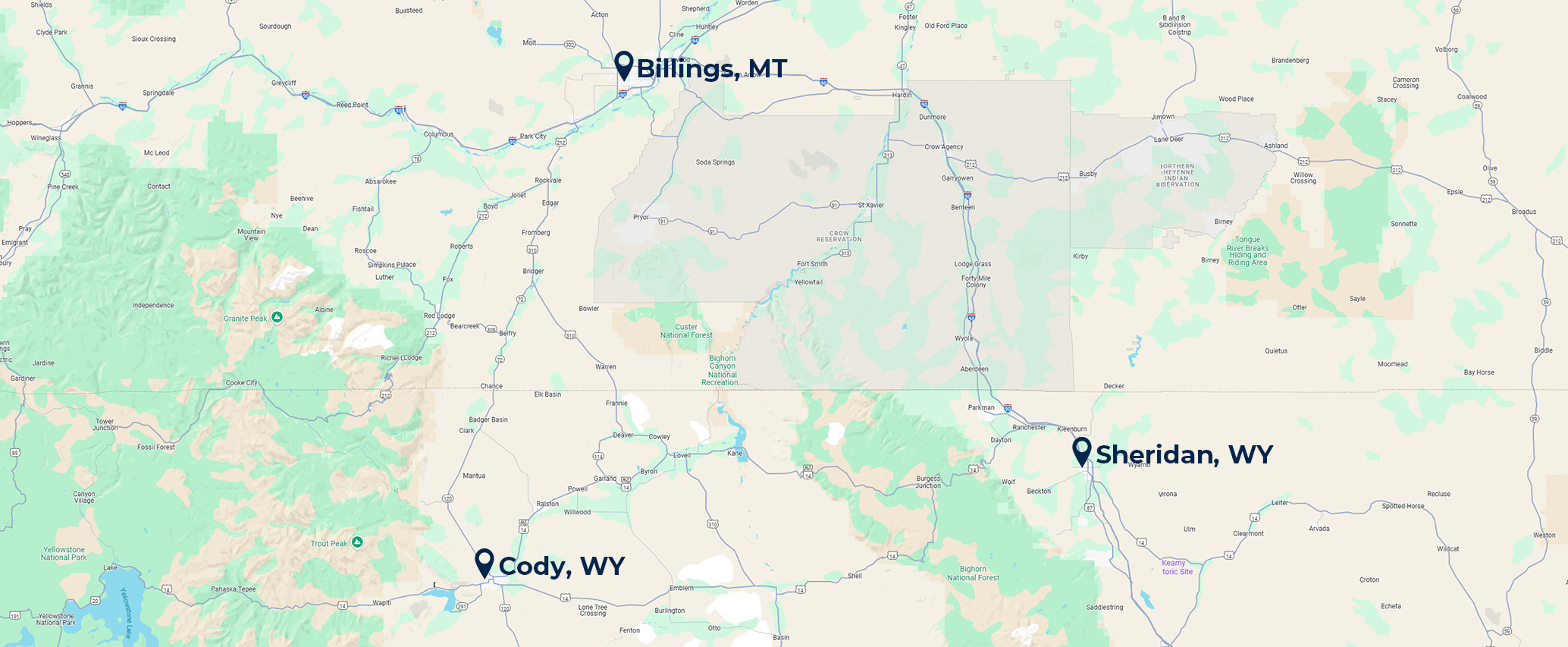
Yellowstone Dermatology Associates has locations in Billings, MT, Cody, WY, and Sheridan, WY, with its main office at 178 S 32nd St W, Suite 2, Billings, MT 59102. The practice is led by Dr. Eric Maranda, MD, FAAD, a board-certified dermatologist and Mohs surgeon who trained at the University of Miami Miller School of Medicine and is an active Fellow of the American Academy of Dermatology.
Disclaimer
The information provided in this article is for educational purposes only and does not constitute professional medical advice, diagnosis, or treatment recommendations. Whether Mohs surgery is right for a specific skin cancer can only be determined through an in-person evaluation. Always consult your dermatologist with any questions regarding your diagnosis or treatment.
Blog Post Author

Contributed by Market Igniter
Market Igniter provides relevant content to help providers educate patients. The statements, services, and products referenced in this article have not been evaluated by the Food and Drug Administration, and they are not intended as a substitute for professional medical advice, diagnosis, or treatment. Always seek the advice of your provider with any questions or issues you may have. Specific recommendations may vary in different circumstances, so individual consultation is important.