Psoriasis vs. Eczema: How to Tell the Difference
Psoriasis and eczema are both inflammatory skin conditions, so the first glance can be confusing. Each can cause itching, irritation, and visible changes in texture or color. The difference usually becomes clearer when you consider the rash's edges, thickness, location, timing, and accompanying symptoms.
What psoriasis usually looks and feels like
Psoriasis often forms well-defined, raised patches with a dry, silvery or whitish scale, particularly on lighter skin. The skin may feel sore, tight, or itchy, and patches can crack or bleed when they become very dry. Psoriasis is driven by an overactive immune response and tends to follow a recurring pattern of flares and calmer periods.
What eczema usually looks and feels like
Eczema commonly causes intense itching, dryness, and irritation. Depending on the person and the stage of a flare, the skin may look dry and scaly, swollen, thickened from repeated scratching, or moist and weeping. Eczema often has less sharply defined borders than psoriasis, though appearance can vary widely.
Where the two conditions overlap
Both conditions can affect the scalp, face, hands, and other visible areas. Scratching can make either rash thicker, more painful, and more vulnerable to infection. Because appearance can change over time, a rash that seems straightforward in a photograph may be harder to classify during an in-person exam.
How the rashes look on different skin tones
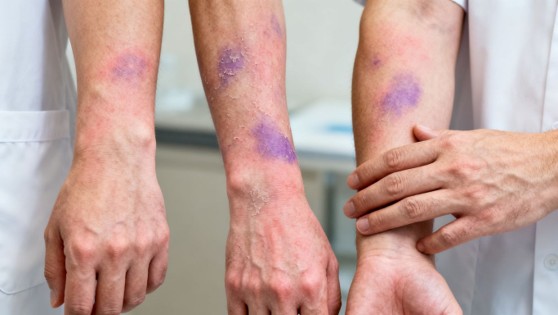
Descriptions of psoriasis and eczema often focus on redness, but redness may be subtle or difficult to see on brown or Black skin. Inflammation can instead appear as purple, gray, dark brown, or lighter-than-usual areas. Looking at texture, warmth, swelling, and changes from the person's usual skin tone can provide useful clues.
Redness, scaling, and color changes
On lighter skin, inflammation may look pink or red, with visible white or silvery scale. On darker skin, the same inflammation may look violet, deep brown, or gray, and can leave temporary darkening or lightening after a flare settles. That lingering discoloration does not necessarily mean the underlying condition is still active. Scaling, thickening, cracking, warmth, and a clear difference from nearby skin may be more informative than redness alone.
Why photos alone can be misleading
Lighting, camera settings, and skin color can all affect how a rash appears in a photograph. A close image also cannot show how thick the skin feels, whether the area is warm, or how the rash has changed over several days. Photos can help document a flare, but they should support—not replace—a clinical assessment.
Where psoriasis and eczema tend to appear
Location can offer a useful clue, although neither condition is restricted to a single body area. Psoriasis often favors the outer surfaces of joints, while eczema commonly affects folds and areas where the skin barrier is easily irritated. Age, treatment history, and the person's pattern of flares matter too.
Common psoriasis locations
Common sites include the elbows, knees, scalp, and lower back. Psoriasis may also affect the nails, causing pitting, separation, or changes in color, and it can occur in the skin folds or on the palms and soles. A dermatologist may look for patches in several locations rather than judging one isolated spot.
Common eczema locations
Eczema frequently appears in the creases behind the knees or inside the elbows, as well as on the hands, face, neck, and eyelids. In babies, the cheeks and outer limbs may be involved. Hand eczema can be especially disruptive because frequent washing, friction, and exposure to irritants can keep the skin from recovering.
Clues from the scalp, hands, face, and skin folds
The scalp can be affected by either condition, while facial and eyelid irritation is often especially sensitive to treatment. Thick, sharply bordered plaques may suggest psoriasis, whereas burning, dryness, and a history of irritant exposure may fit eczema. Skin-fold rashes can be difficult to identify because moisture and friction may alter their typical appearance.
Comparing symptoms and triggers
Symptoms overlap, but their quality and timing can still help organize the possibilities. Psoriasis may feel sore or painful as well as itchy, while eczema is often dominated by intense itch and a cycle of scratching. Neither pattern is absolute, and triggers differ from person to person.
Itching, pain, burning, and cracking
Eczema often produces a powerful urge to scratch, followed by more inflammation and skin damage. Psoriasis can itch too, but thick plaques may also feel painful, tight, or tender. Both conditions can crack, especially on the hands, feet, or areas exposed to cold, dry air.
Typical psoriasis triggers
Psoriasis flares may follow skin injury, illness, stress, smoking, alcohol use, or changes in certain medicines. Cold, dry weather can also worsen symptoms for some people. A trigger does not prove the diagnosis; it simply helps a clinician understand the individual pattern.
Common eczema triggers and flare patterns
Eczema may flare after contact with soaps, detergents, fragrances, solvents, wool, sweat, or other irritants. Dry air, heat, stress, and repeated scratching can also contribute. When a rash repeatedly follows a particular exposure, keeping a brief symptom diary may make the pattern easier to discuss at an appointment.
A short record can include:
- The date a flare began and where it appeared
- New soaps, cosmetics, medicines, or laundry products
- Weather changes, sweating, illness, or unusual stress
- Treatments tried and how the skin responded
This kind of record cannot diagnose the rash, but it can reveal useful timing. It may also help separate a one-time irritation from a recurring condition.
When an infection or allergy may be involved
Crusting, pus, increasing warmth, rapidly spreading redness, fever, or worsening pain can point to infection and deserve prompt medical advice. A rash that appears soon after a new product may reflect contact dermatitis, but allergy testing is not automatically needed for every flare. A clinician can decide whether the pattern fits infection, allergy, eczema, psoriasis, or another condition.
How doctors diagnose the condition
There is no single home test that reliably separates psoriasis from eczema. Diagnosis usually comes from the history, the distribution of the rash, its texture, and the way it has changed. The clinician may also ask about family history, allergies, joint symptoms, nail changes, and previous treatments. For general background on psoriasis, the National Library of Medicine's MedlinePlus is a useful patient resource.
What to expect during a skin exam
A dermatologist will inspect the affected skin and may examine the scalp, nails, elbows, knees, folds, and other areas even if they are not currently bothering you. Be ready to describe when the rash started, what it feels like, and whether anything makes it better or worse. Mentioning every product or medication used on the area is helpful, including over-the-counter creams.
When a biopsy or allergy testing may help
A small skin biopsy may be considered when the appearance is atypical or another diagnosis needs to be ruled out. Patch testing can help identify allergic contact dermatitis when a recurring rash follows contact with particular substances. These tests are selected for a reason; they are not required in every case of suspected eczema or psoriasis.
Why self-diagnosis can lead to the wrong treatment
Several rashes can look scaly, itchy, or inflamed, including fungal infections, seborrheic dermatitis, contact dermatitis, and other inflammatory disorders. Using the wrong cream can mask important clues or worsen an infection. A professional diagnosis is especially valuable when the rash is widespread, painful, recurrent, or not responding as expected.
Treatment options for psoriasis and eczema
Treatment depends on the diagnosis, the extent of the rash, its location, and how much it affects sleep or daily life. Many people need a combination of daily skin care and prescription treatment during flares. The goal is usually to calm inflammation, repair the skin barrier, and reduce future flare-ups.
Moisturizers, topical steroids, and other creams
Regular use of a fragrance-free moisturizer can reduce dryness and support the skin barrier in both conditions. Clinicians may prescribe topical corticosteroids or other anti-inflammatory medicines, with the strength and duration adjusted for the body site. Sensitive areas such as the face, eyelids, and skin folds often require a different approach from thicker skin on the elbows or knees.
Phototherapy and prescription medications for psoriasis
For more extensive or persistent psoriasis, a dermatologist may discuss phototherapy or prescription medicines that work throughout the body. Options can include oral or injectable treatments, depending on the person's health, symptoms, and treatment history. Monitoring and follow-up are important because these therapies have different risks and eligibility requirements.
Managing eczema with trigger avoidance and barrier care
Eczema care often combines frequent moisturization with gentler bathing, shorter showers, and avoidance of known irritants. Keeping nails short can reduce damage from scratching, while cool compresses may provide temporary relief during an itch cycle. If basic care is not enough, a clinician may prescribe anti-inflammatory or other targeted treatment.
Why treatment depends on severity and location
A mild patch on an arm may be treated differently from a rash covering much of the body or affecting the eyes, hands, or genitals. The safest plan accounts for the diagnosis, skin thickness, age, other medical conditions, and practical routine.
When to see a dermatologist
A persistent or recurring rash deserves attention when it interferes with sleep, work, school, or ordinary movement. You do not need to wait until the skin becomes severe before asking for help. Early assessment can clarify the diagnosis and prevent repeated cycles of ineffective treatment. You can schedule an appointment with our team for an evaluation.
Signs the rash needs medical attention
Seek medical advice for a rash that spreads quickly, becomes painful, blisters, bleeds repeatedly, or shows signs of infection. Medical review is also sensible when symptoms affect the eyes, mouth, genitals, or a large portion of the body. A rash in an infant, or one accompanied by fever or feeling unwell, should be evaluated promptly.
Symptoms that may point to psoriatic arthritis
Joint pain, swelling, stiffness that is worse in the morning, or a whole finger or toe that becomes swollen can occur with psoriatic arthritis. Nail pitting or nail separation may be another clue when it appears with suspicious skin patches. Report these symptoms rather than assuming they are unrelated, because early evaluation can matter for joint health.
What to do when treatment is not working
If a recommended treatment has not helped after the expected period, contact the prescriber instead of applying more or using it more often without guidance. The diagnosis may need to be revisited, the medicine may need adjustment, or an infection or contact allergy may be complicating the flare. Bring photographs and a list of products used since the last visit.
Can psoriasis and eczema happen together?
It is possible for one person to have both conditions, although distinguishing them can be difficult when they overlap. Some rashes also have features of more than one inflammatory disorder, so a clinician may use the history and examination over time to refine the diagnosis. The right treatment may address each condition separately.
Conclusion
Psoriasis and eczema can look alike, but differences in texture, location, symptoms, triggers, and timing often provide useful clues. Because rashes change and can appear differently across skin tones, a dermatologist's assessment is more reliable than a photograph or quick self-diagnosis. Seek care for persistent, painful, widespread, infected-looking, or treatment-resistant skin changes. Our FAQ page covers more common patient questions.
Frequently Asked Questions
Is psoriasis contagious?
No. Psoriasis is an inflammatory condition and does not spread from person to person through touch, clothing, or shared surfaces.
Is eczema contagious?
No. Eczema itself is not contagious. However, scratched skin can become infected, and an infection may sometimes be transmissible depending on its cause.
Can eczema turn into psoriasis?
Eczema does not typically transform into psoriasis. They are separate conditions, although a person can develop either condition at different times or have both.
Does psoriasis always have silver scales?
No. Scaling varies by body site, skin tone, and treatment. Some plaques may look darker, purple, gray, or less scaly than the classic descriptions suggest.
Can stress cause psoriasis or eczema?
Stress may worsen flares for some people with either condition, but it is not the only cause. Other factors can include genetics, immune activity, weather, irritants, illness, and medication changes.
Should I use an over-the-counter steroid cream?
Ask a healthcare professional or pharmacist for guidance, especially before using it on the face, eyelids, skin folds, children, or large areas. The wrong strength or duration can cause problems or hide another diagnosis.
When should a rash be checked urgently?
Seek prompt medical care for rapidly spreading redness, severe pain, fever, pus, significant swelling, blistering, breathing symptoms, or involvement of the eyes or mouth. A widespread rash with a person feeling very unwell also needs timely assessment.
About the Author
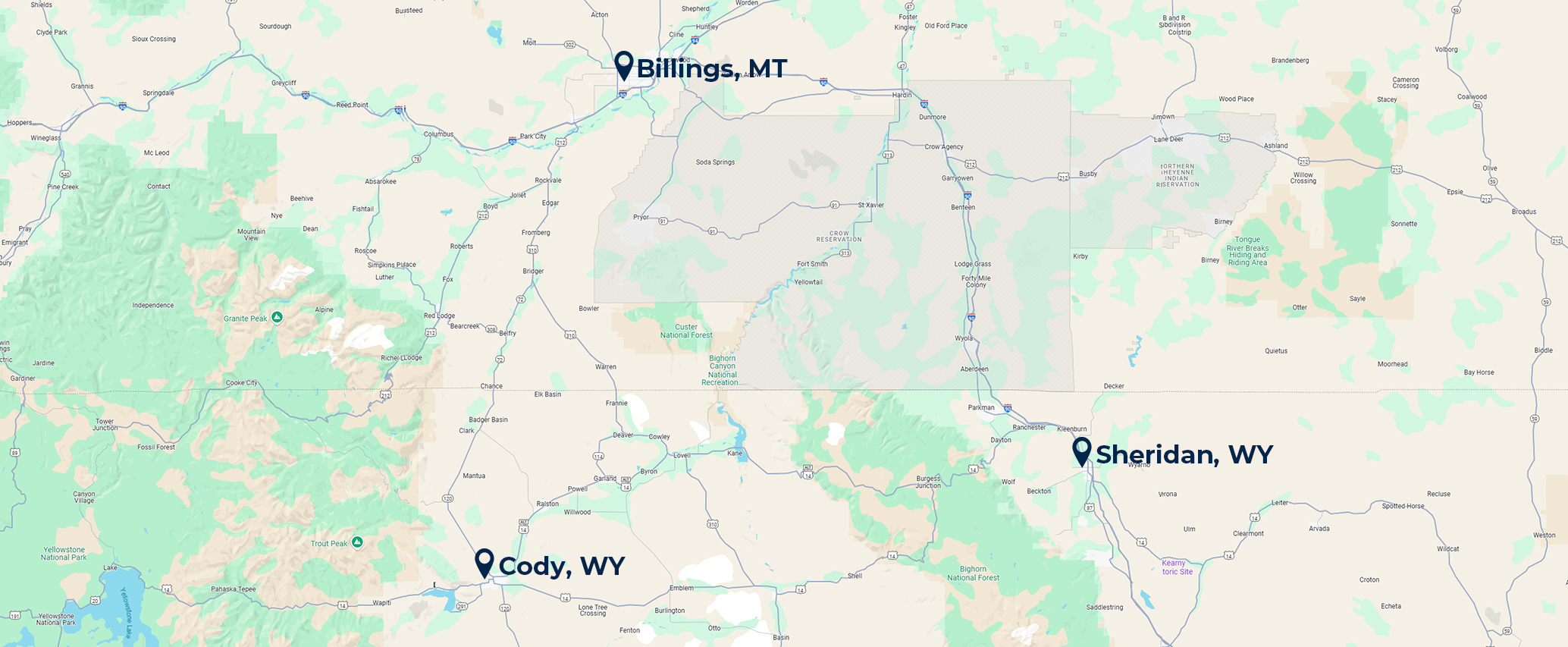
This article was reviewed by the clinical team at Yellowstone Dermatology Associates, led by Dr. Eric Maranda, MD, FAAD, a board-certified dermatologist. Yellowstone Dermatology Associates is located at 178 S 32nd St W, Suite 2, Billings, MT 59102, with additional locations in Cody and Sheridan, Wyoming. The practice provides comprehensive medical, surgical, and cosmetic dermatology care to patients throughout Montana and Wyoming.
Disclaimer
This article is for informational purposes only and does not constitute medical advice. It is not a substitute for professional diagnosis or treatment. Always consult a board-certified dermatologist or qualified healthcare provider regarding any skin condition, symptom, or treatment decision.
Blog Post Author

Contributed by Market Igniter
Market Igniter provides relevant content to help providers educate patients. The statements, services, and products referenced in this article have not been evaluated by the Food and Drug Administration, and they are not intended as a substitute for professional medical advice, diagnosis, or treatment. Always seek the advice of your provider with any questions or issues you may have. Specific recommendations may vary in different circumstances, so individual consultation is important.