What Is Mohs Surgery and When Is It Used for Skin Cancer?
Who developed Mohs surgery and why is it so widely used today?
So, what exactly is Mohs surgery for skin cancer? Basically, it's a super precise way to get rid of skin cancer, especially the tricky kinds. Think of it like a highly detailed mapmaker for cancer cells. It was developed way back in the 1930s by a doctor named Frederic E. Mohs. He was trying to find a better way to remove skin cancer, and his method has really stuck around and gotten even better over the years.
What makes it so popular today is its accuracy. Unlike just cutting out a lump and hoping for the best, Mohs surgery involves removing the visible cancer along with a tiny bit of surrounding skin. Then, the surgeon immediately looks at that removed bit under a microscope. If there are still cancer cells hanging out at the edges, they go back and remove just a little more of that specific spot. This process repeats until they're absolutely sure all the cancer is gone. This layer-by-layer approach means you're only removing the cancerous tissue, saving as much healthy skin as possible.
This is a big deal, especially for cancers on sensitive areas like your face, ears, hands, or feet, where you really want to keep as much normal skin intact as you can. It's a common treatment because it has a really high success rate, often up to 99% for getting rid of the cancer completely. It's pretty much the gold standard for certain types of skin cancer.
Mohs Surgery Procedure Explained Step by Step
So, you're wondering what actually happens when you go in for Mohs surgery? It's a pretty neat process, honestly. Think of it like being a detective, but instead of solving a mystery, your surgeon is hunting down every last bit of cancer.
What happens in the lab during a Mohs surgery appointment?
First off, the surgery itself is done right there in the doctor's office, usually with just local anesthesia, so you're awake but comfy. The surgeon removes the visible part of the skin cancer along with a tiny bit of surrounding healthy-looking skin. This first piece is like your initial clue.
Then comes the part that makes Mohs so special. That piece of tissue? It doesn't just get sent off to some faraway lab. Nope, it goes straight to an on-site lab, often right next door. Here's the breakdown of what happens:
- Mapping and Freezing: The surgeon carefully draws a map of the tissue, noting exactly where it came from on your body. Then, the tissue is frozen solid. This makes it super easy to slice thinly.
- Thin Slicing: Using a special tool, the lab technician shaves off super-thin layers from the edges and the bottom of the tissue sample. We're talking thinner than a piece of paper.
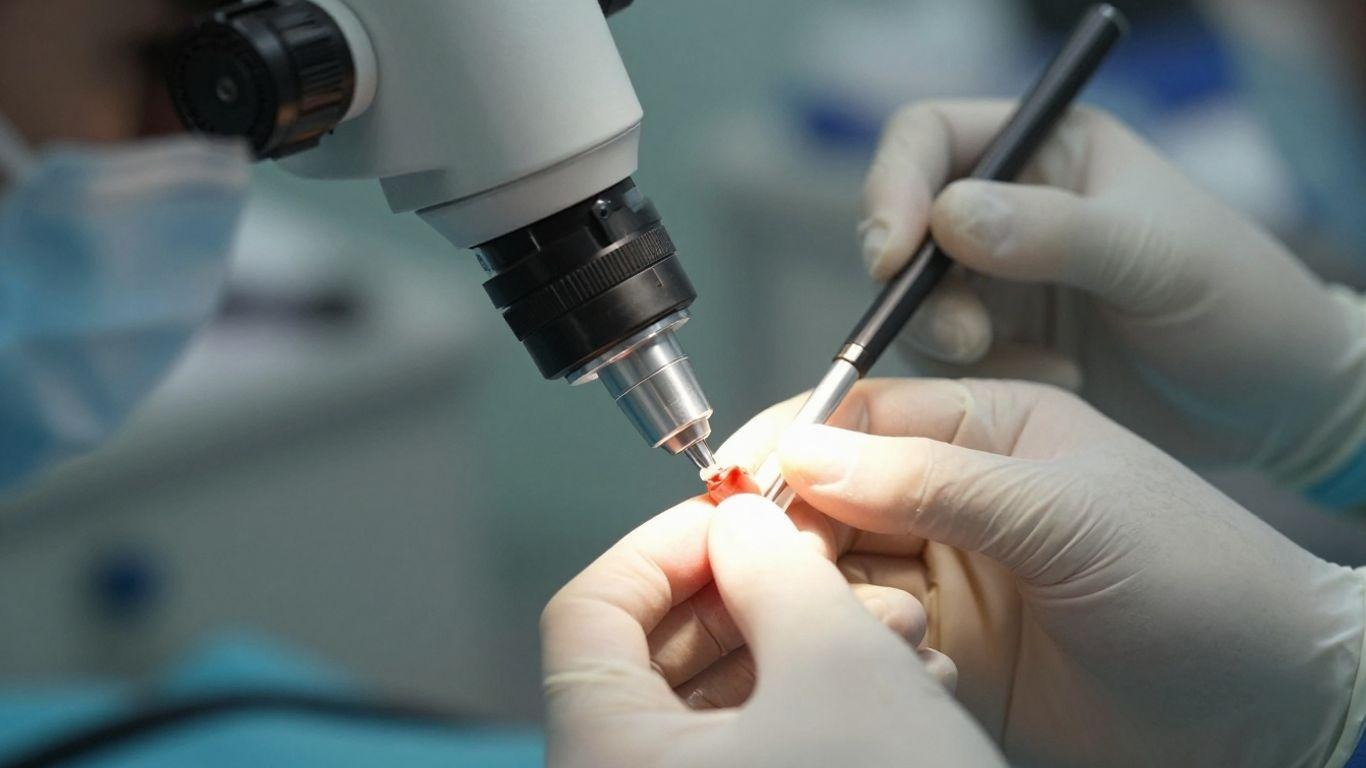
- Microscope Time: These thin slices are then put on slides, stained so the cells stand out, and examined under a microscope by your Mohs surgeon. They're looking for any sneaky cancer cells hiding at the edges (called margins).
If the surgeon spots any cancer cells, they mark their exact location on the map. Then, you're brought back in, and the surgeon removes just a tiny bit more tissue from that specific spot. This whole process – removing, mapping, freezing, slicing, and examining – is repeated until the surgeon can look at the slides and see that all the cancer cells are gone. This is the key to Mohs surgery: checking 100% of the margins while you're still right there.
It might sound like a lot of back-and-forth, and it can take a few hours, so bring a book or your phone to keep busy. But this step-by-step approach means you're not losing any more healthy skin than absolutely necessary. It's all about being super precise.
Once the cancer is completely gone, the surgeon will talk to you about the best way to close the wound. This could be letting it heal on its own, stitching it up, or sometimes using a small skin graft or flap to cover the area. The goal is to heal well and keep things looking as good as possible.
When Is Mohs Surgery Recommended for Skin Cancer?
So, when do doctors actually decide that Mohs surgery is the way to go for skin cancer? It's not usually the first option for every little spot, but it really shines in specific situations. Mohs surgery is generally recommended for skin cancers that are high-risk, located in cosmetically sensitive areas, or have a tendency to grow back.
Which types of skin cancer are best treated with Mohs surgery?
While Mohs can be used for a few different types of skin cancer, it's most commonly used for the big two:
- Basal Cell Carcinoma (BCC): This is the most common type of skin cancer. Mohs is often the go-to for BCCs that are large, have irregular borders, are located on the face (like the nose, eyelids, or lips), or have appeared before in the same spot.
- Squamous Cell Carcinoma (SCC): The second most common skin cancer. Mohs is a great choice for SCCs that are aggressive, located in areas where preserving tissue is important (think ears, lips, or hands), or if they've already been treated and came back.
There are also some less common, but more aggressive, skin cancers where Mohs surgery might be the best treatment path. These can include things like:
- Dermatofibrosarcoma protuberans (DFSP)
- Certain types of melanoma (though this is less common)
- Microcystic adnexal carcinoma
- Sebaceous carcinoma
The main idea behind choosing Mohs is to get rid of all the cancer while saving as much healthy skin as possible. This is especially important for areas where you want the best cosmetic outcome and minimal scarring.
Why do dermatologists prefer Mohs over standard removal in many cases?
Think of it like this: standard excision is like cutting out a piece of cake and just looking at the top and sides. You hope you got all the frosting (cancer) off, but you're not entirely sure about what's hidden underneath. Mohs surgery, on the other hand, is like meticulously checking every single crumb of that cake to make sure no frosting is left behind. Your dermatologist gets to see 100% of the edges of the removed tissue under a microscope right then and there. If any cancer cells are spotted, they can go back and remove just that tiny bit more, ensuring they've cleared the entire growth. This precision leads to higher cure rates, especially for those tricky, high-risk cancers, and often means less healthy tissue needs to be removed compared to a standard wider excision.
Mohs Surgery vs Traditional Excision — Key Differences
Why do dermatologists prefer Mohs over standard removal in many cases?
So, you've got a skin cancer, and your doctor mentions Mohs surgery. What's the big deal compared to just, you know, cutting it out the usual way? Well, the main mohs surgery vs traditional excision difference boils down to precision and how much tissue is checked. Think of it like this: standard excision is like taking a guess at how much of the bad stuff to remove, while Mohs is like having a super-detailed map.
With traditional excision, the surgeon removes the visible cancer along with a bit of surrounding skin, called a margin. This piece is then sent off to a lab. The catch? Usually, only a tiny fraction, less than 1%, of those edges are actually looked at under a microscope. If there's still cancer lurking there, you might need another surgery.
Mohs surgery, on the other hand, is a whole different ballgame. The surgeon removes the visible tumor and a small margin, but then, here's the key part, they immediately examine all of the edges under a microscope, right there in the office. If any cancer cells are found at the edges, the surgeon knows exactly where to go back and remove just a little bit more tissue. This process repeats until there's absolutely no cancer left.
Here’s a quick rundown:
- Mohs Surgery: Checks 100% of the tissue edges under a microscope during the procedure. This means you know for sure all the cancer is gone before you leave.
- Traditional Excision: Checks a small percentage (less than 1%) of the tissue edges. You might need follow-up surgery if cancer is found later.
This meticulous approach means Mohs surgery spares as much healthy tissue as possible. That's a huge deal, especially when the cancer is in a tricky spot like your face, ears, or hands, where you want to keep things looking as good as they can.
The biggest win with Mohs is that it offers the highest cure rates for many skin cancers, often up to 99%, while also preserving the most healthy skin. It's a bit more time-consuming on the day of the procedure because of the waiting involved, but for many, the peace of mind and better cosmetic outcome are totally worth it.
So, while both methods aim to remove skin cancer, Mohs surgery is like the high-definition version, giving doctors a crystal-clear view of exactly where the cancer ends and healthy skin begins.
Mohs Surgery Recovery and Success Rate — What Patients Should Know
So, you've had Mohs surgery, or you're thinking about it. What happens next? Let's talk about the mohs surgery recovery and success rate.
Recovery from Mohs surgery is usually pretty straightforward, especially since it's often done right in the doctor's office under local anesthesia. You'll likely feel a bit sore where the procedure was done, but most people can get back to their normal activities pretty quickly, usually within a day or two. Your doctor will give you specific instructions on how to care for the wound, which might involve keeping it clean, applying bandages, and avoiding strenuous activity for a little while.
The biggest win with Mohs is its incredibly high success rate. We're talking about cure rates that can reach up to 99% for certain types of skin cancer. This is because the surgeon removes cancer layer by layer, checking each one under a microscope until there's absolutely no cancer left. This means less healthy skin is removed, which is great for minimizing scarring, especially on visible areas like the face.
Here's a quick rundown of what to expect post-surgery:
- Wound Care: Follow your doctor's instructions to the letter. This usually involves gentle cleaning and dressing changes.
- Activity: Take it easy for a day or two. Avoid heavy lifting or anything that might put strain on the surgical site.
- Follow-up: You'll likely have a follow-up appointment to check on the healing and make sure everything looks good.
- Scarring: While Mohs aims to preserve healthy tissue, some scarring is inevitable. The appearance of the scar will depend on the size and location of the cancer, but doctors are skilled at closing wounds to make them as unnoticeable as possible.
The meticulous, step-by-step approach of Mohs surgery is what makes it so effective. By examining every edge of the removed tissue, surgeons can be confident they've gotten all the cancer, leading to those impressive success rates and a lower chance of the cancer coming back compared to other methods.
Conclusion
So, that's the scoop on Mohs surgery. It's a special way doctors remove skin cancer, especially in tricky spots like your face or hands. The main idea is to get rid of all the cancer while saving as much healthy skin as possible. Mohs surgery might take a few hours, but it's very good at stopping cancer from coming back. If your doctor suggests it, now you know what to expect. And hey, if you have more questions, don't be shy—just ask your doctor. They're there to help.
Frequently Asked Questions
Is Mohs surgery painful?
Not really. The doctor will numb your skin first, so you shouldn't feel pain during the surgery. You might feel a little sore afterward, but it's usually not bad.
How long does Mohs surgery take?
It depends. Sometimes it takes a couple of hours, sometimes longer. Most of the time, people are done in half a day. Bring something to keep busy while you wait.
Will I have a scar after Mohs surgery?
Yes, there will be a scar, but doctors try to make it as small as possible. They might use stitches or let it heal on its own, depending on the spot.
Can Mohs surgery treat all kinds of skin cancer?
No, it works best for certain types like basal cell and squamous cell cancers. Sometimes it's used for other rare skin cancers, but not always for melanoma.
Do I need to stay in the hospital for Mohs surgery?
Nope! It's usually done in the doctor's office, and you can go home the same day.
How soon can I go back to normal activities?
Most people can get back to normal stuff in a day or two. If your job is physical, you might need to wait a little longer, but your doctor will tell you what’s best.
Blog Post Author

Contributed by Market Igniter
Market Igniter provides relevant content to help providers educate patients. The statements, services, and products referenced in this article have not been evaluated by the Food and Drug Administration, and they are not intended as a substitute for professional medical advice, diagnosis, or treatment. Always seek the advice of your provider with any questions or issues you may have. Specific recommendations may vary in different circumstances, so individual consultation is important.